When you think of cannabis, you more than likely get visions of openness, happiness, calm, creativity, and the like. While these are all common experiences and emotions felt when cannabis is used, these are the present experience for most with cannabis, not the real history. Though cannabis is used across the globe in varying ways, a large part of cannabis’s history is not common knowledge for users and folks who just appreciate cannabis. What history am I talking about, you might be wondering…well, the history of colonization. Now, hold your horses before you get yourself in a tizzy. Colonialism has drastically impacted cannabis and played a part in the cultural uses and understanding of cannabis across the globe. While most countries that were colonized previously have regained their independence (though not all), the effects of colonization are still felt today, and cannabis is one specific area where the effects are very important
to understand.
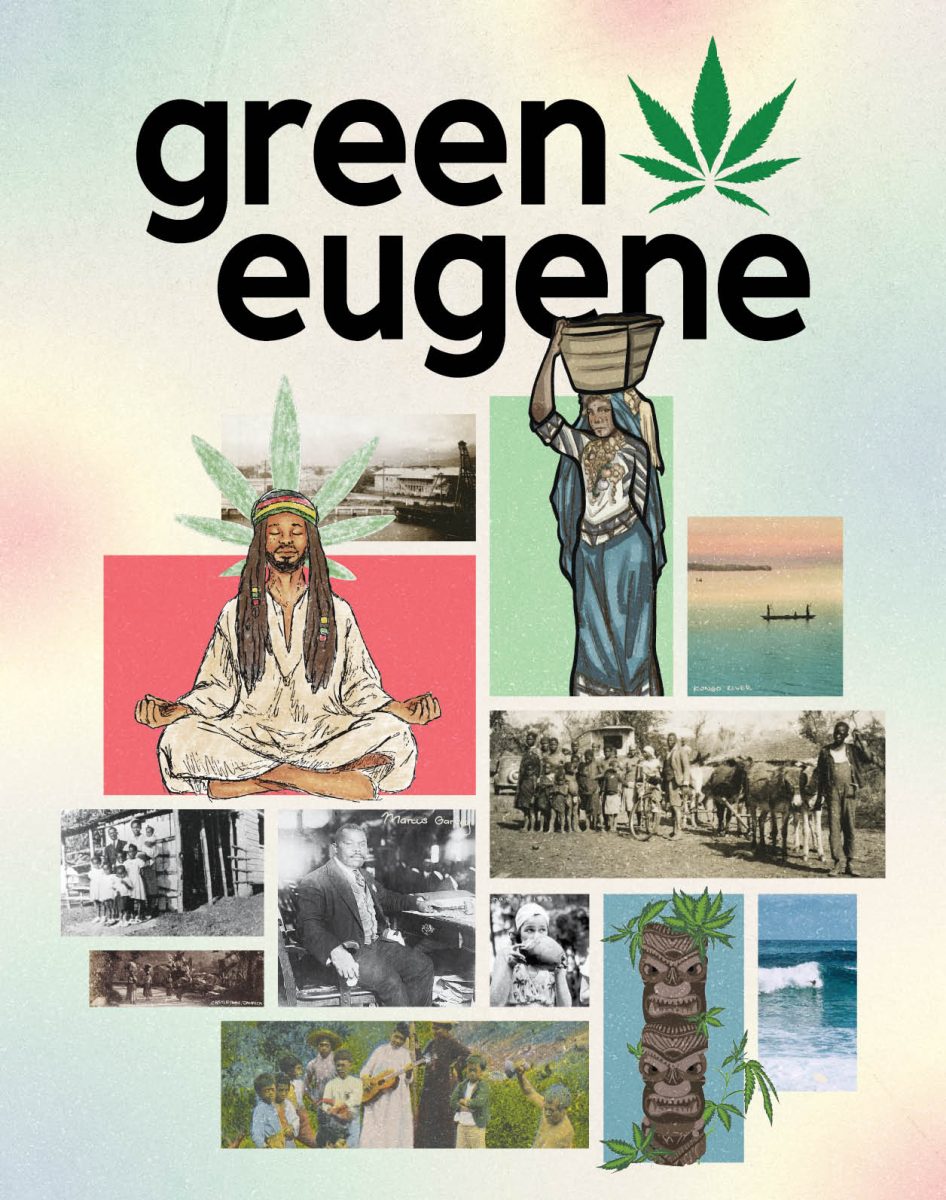
As this is the BIPOC edition, I figured, why not unpack the history of colonization and cannabis, specifically through three cultures: Hawai’ian, Rastafarian, and African. Hawai’i is an interesting case to explore, as Hawai’i has not achieved independence and is still existing under colonialism as a part of the United States of America. Rastafarianism is commonly associated with cannabis, but there are so many holes in the story and dots that still need to be connected for people to fully understand the movement and cannabis’s relationship to it. Lastly, Africa is often left out of cannabis conversations entirely, but it is one of the largest producers of cannabis, behind America. Come along and learn some history not often taught
in classrooms.
The Eradication of Hawai’i’s Dankest Danks
Although Hawai’i is recognized as one of the 50 states, it is a colonized country that had a fully functioning government before the U.S. inserted itself forcefully (i.e., colonialism). Thanks to colonization, so much of Hawai’ian culture has either been ignored, erased, or appropriated, and when it comes to cannabis and Hawai’ian culture, it has been appropriated AND erased.
In the Hawai’ian language, cannabis is known as Pakalōlō, which translates to crazy or numbing tobacco. In Hawai’ian culture today, many people are working to preserve Pakalōlō as the native plant, but the effects and impacts of colonialism make this much harder. The relationship that Hawai’ians had with cannabis has been greatly impacted by the United States intervention through a program called Operation Green Harvest. In the 1970s, this operation searched all over the Hawai’ian islands for cannabis with the goal of eradicating the very strains that were used for Hawai’ian medicinal purposes. Did you know that most native Hawai’ian cannabis strains are extinct?
Hawai’i had four landrace strains of cannabis that were native: Kona Gold, Maui Wowie, Kaua’i Electric, and Puna Buddaz. Due to Operation Green Harvest, most of these landrace strains are no longer cultivated naturally in Hawai’i; instead, they have been brought to the mainland for indoor cultivation. Operation Green Harvest was supported by the Drug Enforcement Administration and used military resources to take the landraces from Hawai’i.
Through government intervention (or rather theft) and the gradual eradication of native cannabis strains, many native Hawai’ians have had to go underground with their growing in an attempt to keep landrace strains alive. The most insidious part of this all is that within Hawai’ian culture, cannabis is a medicinal plant that is celebrated, one might even say revered.
Before the government stormed in, Pakalōlō was a major part of the Hawai’ian economy. You could get it on all the islands, but today, with most growers operating underground, there are not many Pakalōlō strains available for sale in any major way, let alone in an economically sustainable way.
Being a Rastafari is Cool Until You’re Actually a Rastafari
Rastafarianism is commonly associated with cannabis, but for many people, the history and a greater understanding of what it means to be Rastafarian is lacking. Everyone wants red, green, and yellow cannabis stuff, but there is generally very little acknowledgment of the culture that is buried beneath the cannabis-stoner aesthetic.
Rastafarianism began as a political and religious movement in Jamaica in the 1930s. It was built on the work of Marcus Garvey, a political activist and leader of the Pan-African movement. Garvey’s work is central to Rastafarianism, laying the foundation for five tenets: spiritual, historical, political, social, and cultural. Rastafarianism as a political movement is focused on the response of Black people to white colonial oppression. While Garvey’s work doesn’t touch on cannabis, Rastafari have a strong relationship with cannabis, recognizing it as a sacred herb for spiritual purposes.
Rastafari use cannabis for meditation, spiritual elevation, and connection, specifically when praying to Jah (God). The slang term of spliffs actually stems from Rastafarianism and the sacred use of cannabis to enter a meditative state and more easily commune with Jah. While the public perception of Rastafari typically holds that they are just abundant cannabis users, the relationship is much more intentional and spiritual, with cannabis being revered as the “holy herb.”
Considering how religion is so embedded in our society, you would think that Rastafarianism and the importance of cannabis would be respected, right? Well, it’s not. With many Rastafarians being Black folks and heavily melanated, the religious aspect of cannabis is regularly overlooked, and Rastafari are viewed as just being heavy cannabis users. Even in Jamaica, where Rastafarianism was born, cannabis was illegal for religious use
until 2015.
Cannabis Culture in Africa
Cannabis is largely associated with the Black community here in the United States (thanks, Reagan), but cannabis use is actually quite prevalent in the homeland of Africa. Cannabis isn’t native to Africa, but it has been cultivated there for over 1,000 years across many regions and countries. Cannabis is recognized as being introduced to Africa through trade and travel from Asian countries and India. You may be asking, what does colonization have to do with Africa and cannabis? Well, travelers from India weren’t coming through just for fun—they were also living through colonization, which affected trade routes.
Colonization is also important in this conversation because colonizers criminalized cannabis. Former South African Prime Minister, Jan Christiaan Smuts actually urged the League of Nations to recognize cannabis indica and cannabis sativa as “dangerous drugs.” The negative perceptions surrounding cannabis by South African officials (read: colonizers) also led to increased oppression and policing of Black and Indigenous communities in South Africa. The U.S. even played a hand in this dynamic by training the South African police officers, which resulted in increased police brutality.
While cannabis is no longer illegal in South Africa, it is only legalized in nine countries, which is concerning considering that the types of legalization differ, and also due to the fact that up to 48% of the African population uses cannabis in some form. South Africa is the only country that has legalized cannabis for recreational use. Malawi, Zambia, Zimbabwe, Lesotho, Ghana, Rwanda, Uganda, and Morocco all have legalized cannabis for either medical use, research use, exportation, or a mix of those. Morocco produces some of the world’s most popular resin and is the largest global distributor. The lack of large-scale legalization and the commercial legalization for research or medicinal use further exemplify how colonization plays a role in cannabis culture in Africa, as well as continues the history of resource extraction from the country. By limiting cannabis use and criminalizing Africans who do use it, it only continues the longstanding history and ideologies that have been around for centuries.
There is so much to the story of cannabis and Africa (much more than I can cram into this article). If you are looking to learn more about cannabis in Africa, check out the book The African Roots of Marijuana by Chris S. Duvall.
So why do these histories and cultures’ relationships with cannabis matter in the grand scheme of things? Well, look at our present-day society, cannabis is stigmatized, criminalized (in some places), and regulated in ways that overshadow or completely erase the cultural connections that are associated with this plant. The criminalization of cannabis stems from colonization, the racism that colonization bred and birthed, and imperialism’s hand in the bigger picture. As shown earlier, the ways in which stereotypes have been attached to these different cultures are pertinent to unpack, as it is a whitewashed (literally) history that is so ingrained in society that it has allowed mass incarcerations of Black people and people of color for cannabis usage, growing, and selling.
I recognize that this article isn’t going to change history, nor is it going to change our present-day society, but knowledge is the first step in enacting change. Let’s be real, you learned something new reading this article, and you are more than likely going to tell someone about it, and then it continues like a domino effect. Maybe with enough people being aware and talking about cannabis across cultures and countries, we might see some changes in the way this plant is regulated and controlled by the government.