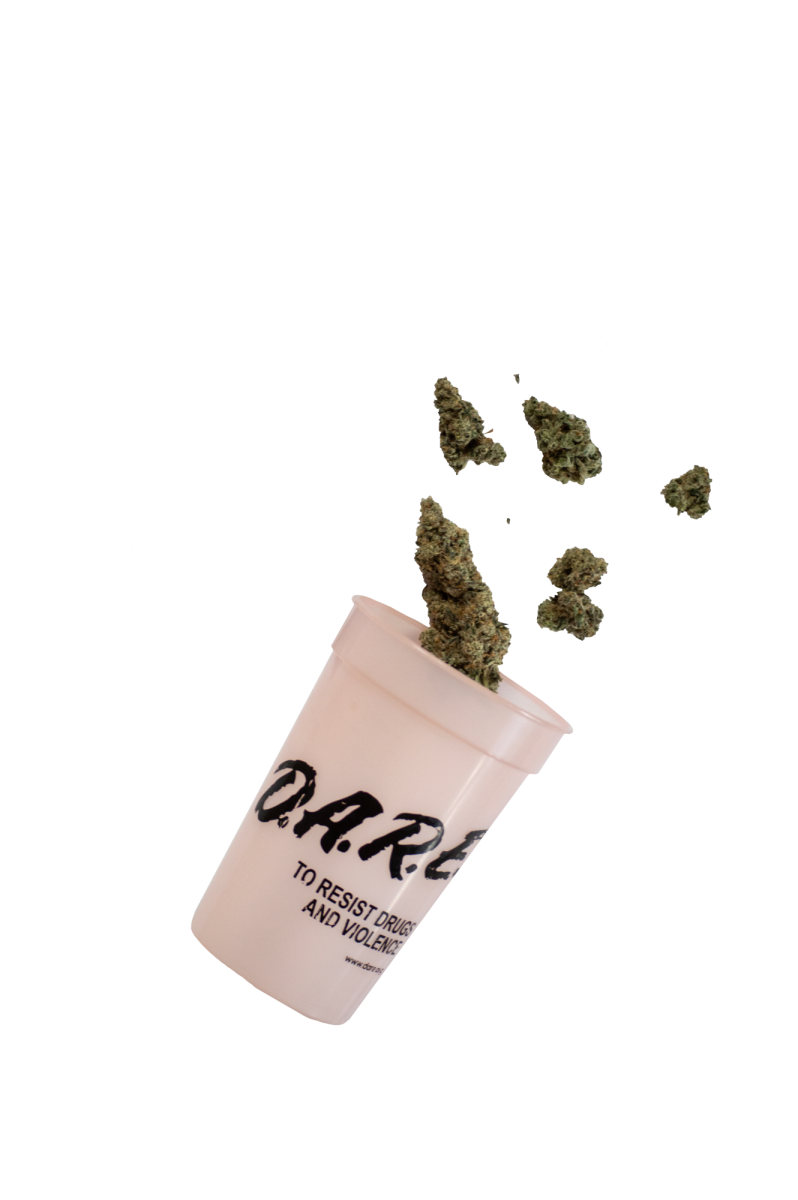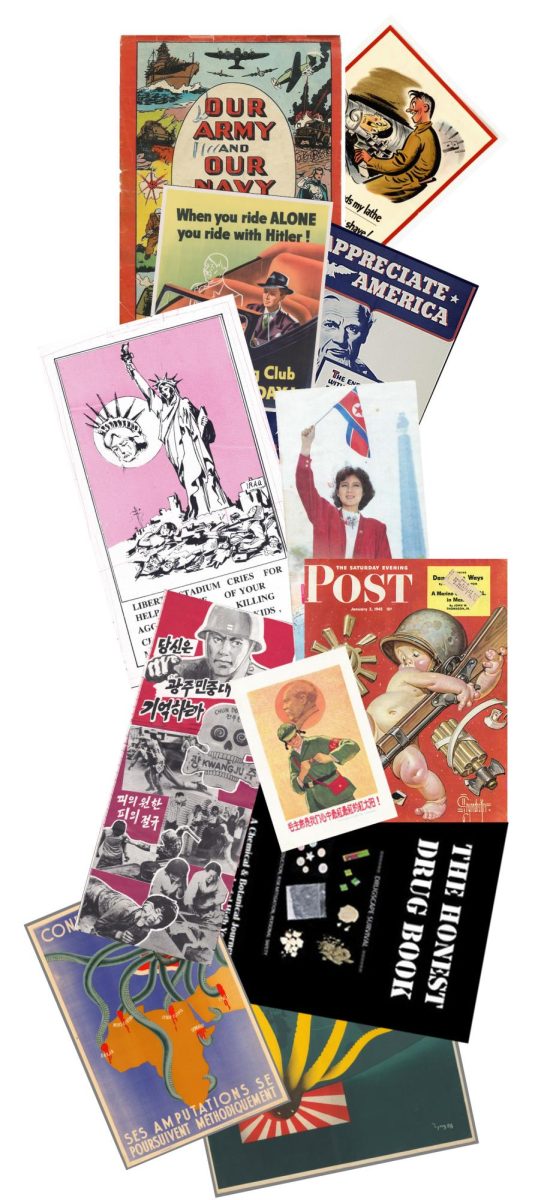
In 1936, the anti-marijuana PSA film Reefer Madness hit the silver screen and depicted hordes of teenagers flinging themselves off of buildings and committing riotous acts of depraved sex and violence as a result of consuming cannabis — or as the movie called it, the “burning weed with its roots in hell.” In the 1980s, the DARE campaign blessed us with some political statements that cannabis makes you gay, and that famous PSA of a fried egg being equated to “your brain on drugs.”
Sensationalist anti-drug campaigns are as classic and all-American as your parents’ SUV, and with that, it’s important to keep in mind that millennials and Gen-Z also grew up with their fair share — with origins just as bizarre as all the rest.
We all remember back in the good ol’ days when we still had cable and were forced to watch commercials. In the mid-2000s, an ad that very much sticks out is the one with the waify white kid in his hoodie standing in a convenience store about to get up to some trouble. His voiceover goes, “They said meth would help me get through my exams,” as it shows him and his welted face pointing a gun at the cashier and everyone in the store, before the cops take him away. Text appears on a black screen that reads “they lied.”
Commercials with this format were everywhere in the mid 2000s, and if you don’t remember them, you’ve likely seen their pamphlet companions circulating online recently for how comedically intense they are.
These commercials all came from the Foundation for a Drug Free World (FDFW), a nonprofit founded in 2006 “that empowers youth and adults with factual information about drugs so they can make informed decisions and live drug-free,” according to its website. Along with PSAs, FDFW sells education packages to schools and other organizations. The packages include quizzes, documentaries, and worksheets.
Usually FDFW’s pamphlets, commercials and documentaries featured some teenager telling us how “they” (you never learn who) told him or her that certain drugs would make their life sunshine and rainbows before showing an image or montage of all of the depraved and terrifying actions that the drug caused them to do — ending the PSAs with the now famous slogan “they lied.” For instance, there’s one with a basic 2000’s party girl saying, “they said if I did coke, I’d party all night. They lied.” Then, she dances on tables and crawls around on the bathroom floor. Another one is a preteen boy saying, “They said one hit wouldn’t hurt. They lied,” and then he just full-on dies. This is not dissimilar to the commercial with a teenage boy saying, “They said prescription painkillers were totally safe. They lied.” and then he dies. That one is important later.
For the marijuana PSA, “they said weed wouldn’t lead to harder drugs. They lied,” and I’m sure you could have guessed that it then slips into a viciously Y2K “you wouldn’t steal a car” piracy PSA-type montage, of a guy and his friends doing all sorts of vague drugs.
Though FDFW is still active today, it has come under fire for several reasons. Of course, the biased and fearmongering way of delivering misleading information without acknowledging or assisting with any of the socioeconomic circumstances that drive youth to drugs is a big critique it receives — but that’s the case with any anti-drug propaganda.
The top reason why people shy away from FDFW is that it is run entirely by the Church of Scientology. That’s right, the religious group for which Tom Cruise is the poster-child, and has been riddled with controversies. For example, using donations as its own personal piggy-bank, being abusive towards its members and has a whole page on their website about how they are not a cult, is what is still telling preteens that coming down from a cocaine high “causes depression so severe that a person will do almost anything to get the drug—even commit murder.”
In many highly publicized instances throughout the aughts, schools that enacted FDFW posters and education angrily dropped them as soon as the institutions or parents alike found out about the Scientology ties.
The reason why all of this is of note is because, like everything, it all goes a lot deeper. Lucas Catton was the former president of Narconon, a drug rehabilitation center run by the Church of Scientology — though it positions itself as independent. After he left the church, Catton admitted in an interview that a large part of his job and the church’s mission is “categorizing all drugs as poisons. And making children become anti-medicine, anti-doctors, anti-psychiatrists.”
Having “a trusted source say that they shouldn’t ever take anything because it will kill you,” Catton says, is “all by design.”
Scientology believes that humans are spiritual beings called thetans, and that drugs, especially those prescribed by doctors, interfere with the spirit. Calling all drugs responsible for “the disintegration of the social fabric” and “the single most destructive element present in our culture,” The Church’s website also says, “The planet has hit a barrier which prevents any widespread social progress—drugs and other biochemical substances. These can put people into a condition which not only prohibits and destroys physical health but which can prevent any stable advancement in mental or spiritual well-being.”
It then goes on to say, “Psychiatry and psychology in particular treat Man as a ‘thing’ to be conditioned, not as a spiritual being who can yet find answers to life’s problems and who can improve enormously.” It concludes that “there is categorically no evidence that diseases such drugs claim to treat even exist — which is to say, it’s all an elaborate and deadly hoax.
This is not ‘Scientology belief’ or ‘opinion.’ This is fact, and this is why Scientologists oppose “psychiatric abuse.”
At the same time, The Guardian did an investigation into Narconon, which found that employees subjected patients to drills similar to Scientology’s auditing process — which is essentially spiritual cleansing by way of rigorously divulging and uncovering one’s deepest traumas. The Guardian writes that repetitive drills would go anywhere from five hours to several weeks, and “while in vulnerable states due to their mental health or prior drug use, that they would go into ‘hypnotic’ states, become paranoid or break down or suffer other extreme reactions.” These included patients leaving traumatized, suicidal, and their minds “shattered,” it continues.
So, in a wild turn of events, the viral PSAs we remember were about religious power and control all along.
The effectiveness of all media anti-drug campaigns is dubious at best. Studies show that “scaring people straight” with posters and commercials may have no effect at all in one direction or the other, and the correlation between drug and PSA consumers is difficult to prove. What we do know is that stigmatizing drugs does cause barriers for people who would otherwise seek treatment.
Despite this, anti-drug propaganda and campaigns are still alive and well, and so too is The Church of Scientology. Though the FDFW posters, booklets, and commercials have been rebirthed into genuinely hilarious short-form content and bizarre trips down memory lane, it does not make it less important to know and weigh the risks and benefits of any substance you may decide to put in your body.
In a similar vein, media literacy is the world’s last hope, and if these posters can teach or fearmonger anything, it should be the importance of staying diligent. Question your government, question your media, question the drugs you consume, do your research, and stay safe — and for the love of everything, don’t make any choices based on what Tom Cruise or L Ron Hubbard tells you to do. Because guess what? They lied.